Forgotten Japanese Singers – The OYSTARS

Another in the series on forgotten Japanese singers I started last time. The main requirements are that the band/singer should have sung at least one anime song and that they should have ceased activities or broken up at least 10 years ago. If they’re pretty well-known in the English world I might skip them, otherwise I won’t be too picky.

Today’s artist: The OYSTARS (ジ・オイスターズ).

Notable anime song(s): Nanka Shiawase (なんか幸せ) from Flame of Recca.

Biography: The OYSTARS were a Japanese rock band from Hiroshima. They were active in Japan from 1993 until 2001. The band’s main members were:

Osamu Funae/ Osamu (舩江修) vocals, guitar
Shuuji Oogushi / Shu-ji (大串修青) bass
Ryuuji Oogushi / Ryu-ji (大串湊史) guitar
Jun’ichi Hari / Harry (羽里潤一) drums
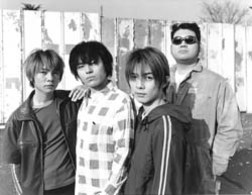
Formed in Japan in 1993, the Oystars first came to prominence in 1995 when they won a musical contest known as the “The 4th Music Quest.” They made their major debut in 1996 under Pony Canyon with the single So Serious ~ Gamushara na Koi” (SO SERIOUS~がむしゃらな恋~). They released their first album “a Ragbaby” and embarked on their first national tour in 1997. In all they released 7 singles and 4 albums.

They split up in September 2001 for unspecified reasons. Post breakup they have all continued to be active as singers, songwriters and producers. Ex-Lead singer Osamu Funae is the CEO of SAMZ Inc., an entertainment, events and dining company in Japan founded in 2003. They still maintain their official blog quite regularly if you want to follow them, though it has very little to do with music these days.

Incidentally, they chose the name “The Oystars” because lead singer Osamu Funae used to work on an oyster farm during their indie days. Oysters also happen to be one of the products their hometown of Hiroshima is known for, so they got a bit of representing in there as well. “Oystars” is NOT a mispelling – they deliberately spelled it that way to copy the way The Beatles are known as ‘Beatles’ and not ‘Beetles,” plus so they could call themselves “Stars” instead of shellfish. Now we know.

Their involvement in Flame of Recca seems like the usual “Agency gets them a tie up” deal so common in Japan. It doesn’t seem like they were specifically selected or that they wrote the song specifically for the anime.

Other songs by The Oystars
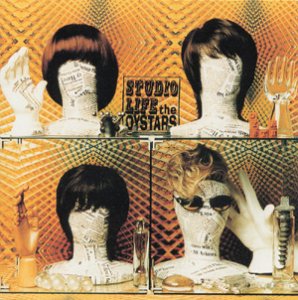
Hmm… TBH Nanka Shiawase isn’t really one of my top anime songs, so I’m not that into The OYSTARS either. I’ve read a few volumes of the Flame of Recca manga, but it didn’t grab me either. Still you never know what musical treasures are out there waiting to be discovered. And they do have music videos for most of their songs on their official website. Let’s try a few and see.

Thrill is just a generic j-rock song, I forgot it as soon as the song ended.
Her reply is clearly very Beatles-inspired, almost like a take on “She loves you.” Also forgettable.
Debut single So Serious is quite similar to “Nanka Shiawase.” It’s not half-bad, it makes a good one-time listen. Yuuki Wasurenai (勇気忘れない) is another boring one.

Okay, I’ve heard enough. The Oystars not really my cup of tea, sorry.

Forgotten Japanese singers – Sario Kijima

Welcome to a new occasional feature I’ll be doing on this blog. I’ve been listening to old anime songs I used to like long ago, some of which I loved before and still enjoy now. Every once in a while I’ll glance at the singer/band’s name and wonder what they’re up to now. At first it was just idle curiosity and I didn’t take it any further than that, but eh, if I’m going to do all that rooting around, I might as well share my findings.

Today’s artist: Sario Kijima (貴島サリオ)

Notable anime song(s): In the Night / Watashi ga Soba ni Iru (私がそばにいる), opening and ending themes to Key the Metal Idol OVA respectively.

Sario Kijima was born Saori Inoshita on February 19, 1974 in Handa, Aichi Prefecture. She got her start in show business after being scouted at a talent show. She picked the stage name by rearranging her name Saori to get Sario and mixing characters from the names of popular sumo wrestler Takanohana (the character 貴) and his Fujishima stable (the character 島) to get Kijima.

She made her acting debut with a role in Fuji TV drama “Alphabet 2/3 (アルファベット2/3)” (someone should do a blog about forgotten Japanese dramas) in April 1992 and her singing debut with “Akiramenai de (あきらめないで)” which was used for an Alpen commercial. She released other songs that were used for commercials, events and anime songs while appearing in a total of 5 dramas.

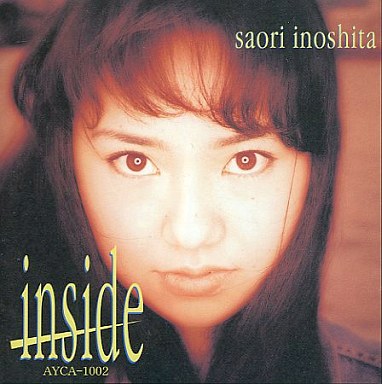
In 1997 she left her agency Pony Canyon and set up her own agency called Dubois. She also changed her name to Sally K briefly before returning to her birth name Saori Inoshita in November of the same year. She changed her singing style to a breathier R & B style and released the “inside” album you see on the right.

After a series of live performances in Shibuya, she stopped performing in 1998 and hasn’t sung professionally since. At the end of her career, her highest position on the Oricon music charts was #46 with Together光の中で (Together Hikari no naka de) in March 1994.

As far as her personal life goes, the internetz tell me she was married to singer-songwriter Yoshimasa Inoue at one point – he produced her “inside” album – and Japanese wikipedia says she is currently married to a graphic designer named Basil Findlay.

I was hoping to dig up more about how Sario Kijima came to sing the Key the Metal Idol themes and what she thought/felt about them, but it seems like this is yet another one of those “powerful agency was able to get her a tie up” situations.

Her music videos are very cute to watch, but her voice is nothing special. I wish she would have tried more ballads like Watashi ga Soba ni Iru, where the slight breathiness of her voice is used to good effect. If you liked the Key the Metal Idol songs, you can try some of her other songs. I spent some time listening to her songs as “research” and liked:

Misty Blue – a very lively, 90s-anime kind of song
Catching My Dream – very generic idol song, wouldn’t feel out of place as an anime opening song
愛が愛であふれてる (Ai ga Ai de afureteru) – rather boring, but reminds me of the Key songs

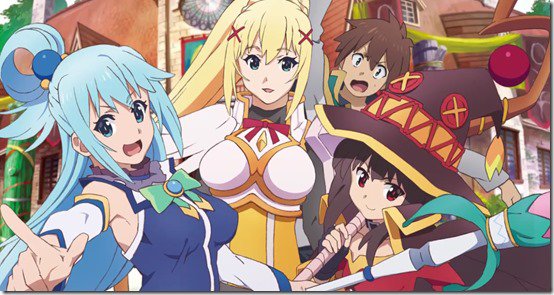
Kono Subarashii Sekai ni Shukufuku wo! Season 1 anime review

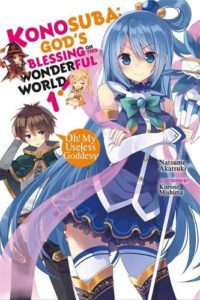
Kono Subarashii Sekai ni Shukufuku wo!, most sensibly abbreviated Konosuba is a light novel by Natsume Akatsuki that was adapted to two seasons of anime in 2016-2017. I only watched the first 10-episode season, which was 10 episodes too many and I’m not even sure why I stuck it out that long.

Summary (from Wiki): Following an untimely and embarrassing death, Kazuma Satō, a Japanese teenage shut-in NEET, meets a goddess named Aqua, who offers to reincarnate him in a parallel world with MMORPG elements. Despite being offered a godlike item or ability to use in this new world, Kazuma, following some provocation, chooses Aqua herself to accompany him to the town of Axel, quickly finding her absent-mindedness to be less than beneficial. With Aqua unable to return to the afterlife until the Devil King is defeated, the two form a party and recruit two other members; an explosion-obsessed magician named Megumin and a masochistic paladin named Darkness.

As I mentioned in my last post on Tsuujou Kougeki (I’m not typing the full title out, gimme a break), the trend these days is towards subversions and deconstructions of the “hero goes to another world” genre. In Konosuba the twist is minor – instead of Kazuma becoming overpowered like other heroes are implied to have done, he has to start from level one and work his way up normally. It’s just a minor setback really, because we all know in the long run he’s going to end up rich and powerful anyway. And besides, Aqua has a cheathax that prevents him from dying for real, so he’s essentially immortal. That’s overpowered in and of itself.

What I liked about Konosuba: The world of the game is very bright and colorful. The land is largely peaceful, the people are fairly friendly, the food looks delicious and in general it looks like a nice place to live.

I also like shows that deal with the practical “what are we going to eat and where are we going to sleep” issues of otherworldly life. It’s a big achievement for the team when they finally get upgraded from living in stables to living in a deserted mansion.

It’s interesting to see how a team with such wacky but powerful characters manages to gel and work together to defeat the powerful opponents they occasionally have to face.

What I disliked about Konosuba: The trashy fanservice and perverted unfunny humor. The goddess Aqua doesn’t wear underwear and prances around in a “dress” barely long enough to be called a short top. If you heard that and thought “Woo hoo!” this is the show for you. Otherwise it just gets annoying, not just Aqua but also other characters like Darkness and the succubi.

Darkness is especially annoying because she’s always writhing around thinking perverted things whether the situation calls for it or not. Usually not. And Kazuma uses his stealing skills to steal panties… Ranma 1/2 ended 20 years ago, dude.


There isn’t much progress made towards finding and beating the Demon Lord in season 1. Kono Subarashii Sekai ni Shukufuku wo! is more a slice of perverted life show with occasional battles than an RPG-based action show. It’s a good watch if you find fanservice funny or interesting or enjoy constant innuendo. Fans might say “There’s more to the show than that!” but a week after finishing this show, only the slimy frogs, the battle against Verdia and the Destroyer and the fanservice scenes (succubi, Darkness’s wild imagination, Kazuma’s panty stealing) come to mind when I try to remember anything. This really isn’t my sort of things so I’ll pass on season two. Next!

Thoughts on Tsuujou Kougeki ga Zentai Kougeki de Nikai Kougeki no Okasan wa Suki desu ka?

I’ve only read the free sample pages of Tsuujou Kougeki ga Zentai Kougeki de Nikai Kougeki no Okasan wa Suki desu ka? provided by Fantasia Books and don’t intend to read any more, but that was enough to form a general opinion. The intention of the free sample is to help the reader decide if they want to read any further, after all, and 70 or so pages of a book is a pretty substantial freebie. This post will contain a few spoilers, so read chapter one and two if you haven’t already.

On to the meat. We all know other world/isekai light novels are all the rage these days. Every other LN features a hero ending up in another world somehow where he somehow becomes overpowered and a chick magnet and all the other otaku fantasy wish fulfillment tropes that the genre is so well-known for. Other world stories are so common these days that’s it’s hard for new books to make a dent – unless they either subvert or deconstruct the genre (getting increasingly common these days) or add some kind of spin or gimmick.

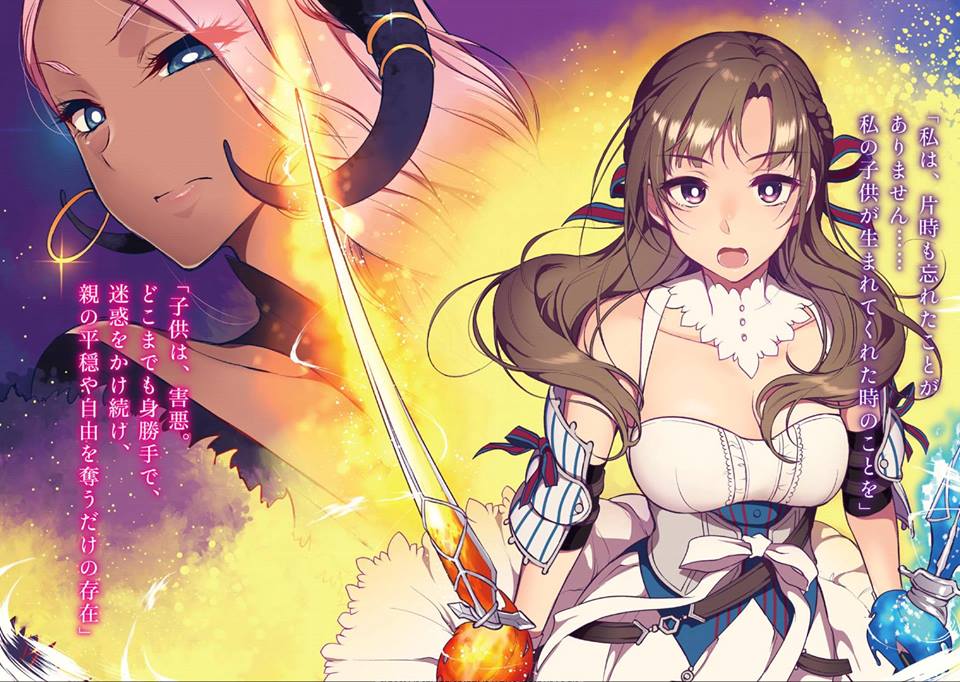
Enter Tsuujou Kougeki – Do You Like Moms Whose Normal Attacks Hit the Whole Enemy Party Twice? The twist here is that the main hero Masato does not go into the game world alone but is accompanied by his doting mom Mamako and it is Mamako, not Masato, who becomes the overpowered hero. It’s pretty funny how he gets so worked up and excited about being the Chosen One… then his mom just walks up and snags the two most powerful weapons in the game. Not only that, but the in-game guidebook suggests there might be other such overpowered mother-son pairs in the MMMMMORPG game. It would be interesting to meet them and see how things go.

So the unexpected swerve is an intriguing one, enough to get even a light novel avoider like me to read it. The problem is, it’s not quite what I expected. I should have smelled a rat when I saw the cutesy, fanservicey picture of Mamako on the cover. What I was expecting was a normal mom, late 30ish early 40ish soccer mom with the dignity and gravitas to match. Putting a regular, realistic everyday person into these kinds of situations is always much funnier and more interesting to me anyway.

Mamako is just annoying. Ditzy, clingy, manipulative, always ready to use tears to control her son if nothing will work. Doesn’t know jack about what’s going on, won’t share what little she does know, won’t listen to common sense advice but charges ahead without a thought in the world. Is this really a woman in her late 30s? How did she survive long enough to breed? The worst part is her fake crying to weasel her way into or out of situations. That’s just plain dirty. The excessive focus on her young appearance and on Masato’s brief moments of attraction to her are just pig-disgusting icing on a pig-disgusting cake.

Masato is no paragon of virtue either. He’s whiny and too cranky and rude towards his mother. I’m sure we can all remember times when we were a little sharper with our moms than we had meant to be, but to snap and snarl at her all chapter long is just… ick. And all that whining and crying just because his mom has better weapons instead of creating a build and learning skills to make the best of what he has. I blame Mamako for bringing him up wrong, that’s what. Plus he’s 15 years old, what can I say?

I didn’t read enough to get to know the loli merchant and the tsundere sage better, but I doubt they’ll be any better than the already-low level established. The tsundere in particular killed my desire to read any more. You know she’s just going to argue with Masato and beat him up all the time but she’s still going to “win” his affection over any better girls in the series anyway. Just thinking about it gives me a headache.

TL;DR – The premise was interesting, but the ditzy personality of the mom and the whiny, cranky personality of her son ruined the whole thing for me. If they make an anime I might try an episode or two, but the interest I had in Tsuujou Kougeki is gone and probably isn’t ever coming back.


Overlord anime review – Nothing really happens

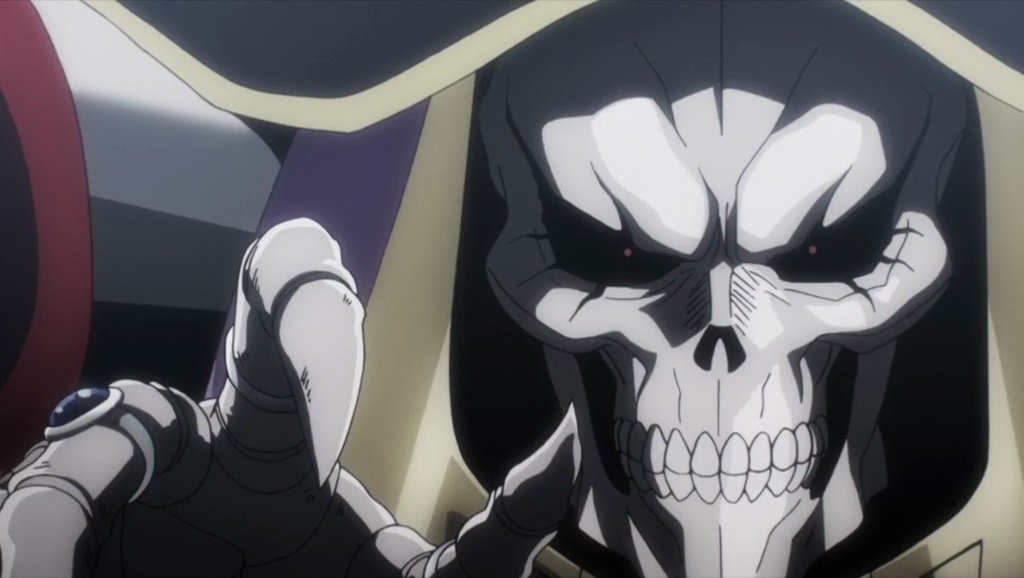
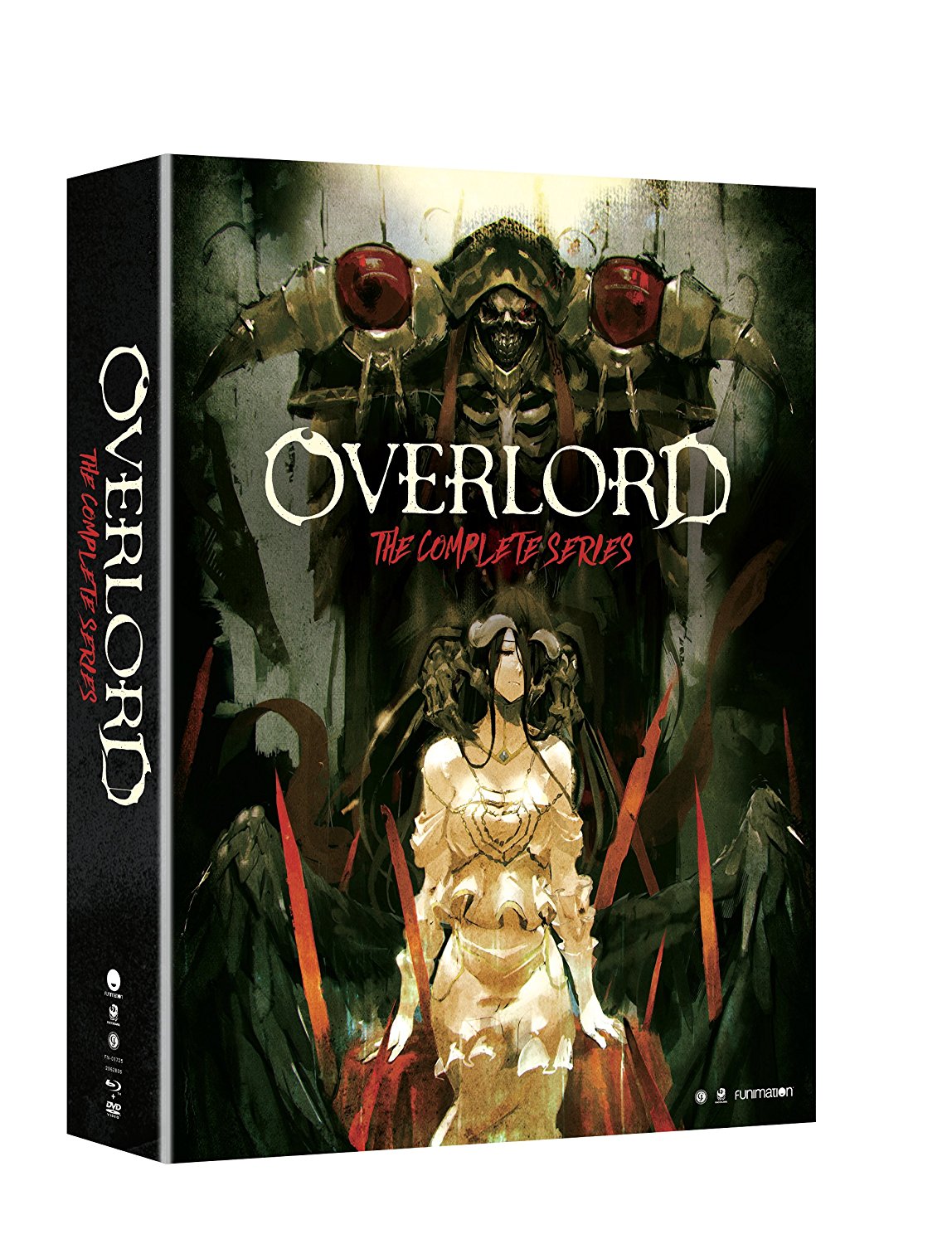
Overlord is yet another isekai anime about an overpowered main character who gets stuck in the world of a videogame. The slight twist on this one is that the main character Momonga a.k.a. Ains is an undead character with a legion of undead servants under him, all loyal to his every command and willing and eager to help him conquer the world.

The good: The slight twist on the setting and the characters’ slightly different morality makes Ains/Momonga and his companions a little more interesting than the “Must save everyone” hero-complex characters that populate 90% of these kinds of shows. For example Ains leaves NPCs dead when he could easily resurrect them (because resurrection would draw the wrong kind of attention). His party also murders another NPC party to keep them out of the way and so they can experiment on the corpses later. Of course these aren’t exactly commendable actions, but their unusual approach to the world makes them unpredictable and thus more interesting to watch.

Overlord also has a fair bit of action and combat – much more than I had expected given Ains’ goal of merely getting famous. I thought he would concentrate more on politics and magic, but he transforms into a warrior class and dukes it out with random mooks instead.

Which was a bit… sad. Sword-using main characters are a dime a dozen in isekai shows, and there’s already a famous dual-wielder out there. The battles Ains fought using his magic, items and skills were far more interesting than the hack-and-slash he used to take on some of the enemies. I hope future battles will focus more on his magical side and less on his Kirito-wannabe tendencies.

Last thing to praise Overlord for: the humor. Though the funniest moments came in the Pure Pure Pleiades specials and not the main series, the show still had some humorous moments. …Or so I thought, but now that I try to come up with examples, nothing really comes to mind. I’ll just say the show had a uniformly light, friendly and adventurous tone even when bodies were falling like raindrops all around. Even the death of some well-developed NPCs wasn’t all that depressing or saddening because the main characters take it all in stride.

The bad: Tasteless and needless vulgarity especially from the characters Shalltear and Albedo. And Cocytus in the specials. Also the show didn’t need to be quite so gory, it smacked of someone trying too hard to make the show hardcore and different from other fluffy game world shows.

The unsatisfying: Shalltear felt inadequate as the ‘final’ boss of an anime series. She was more or less a joke character throughout the show, then suddenly she’s being treated like this giant threat nobody can possibly beat no matter what? I didn’t buy it. Though I admit the final battle was suitably epic, the opponent should have been equally epic and not the previous butt of everyone’s jokes.

Bigger complaint, Overlord really should have been a 26-episode anime. At the end of the 13 episodes things have only really begun to get started. Ains has only just managed to get famous in one city. His bait ploy involving Sebas and Solution has just gotten underway. Powerful characters like Gazef and Brain have met. And most importantly, the only possible threat to Nazarick’s reign, the Slane Theocracy, has just started to show its true nature. Ains Ooal Gown and Slane are on a collision course without a doubt. What’s going to happen now?! Eh? Roll credits? Last episode? You want me to read the light novels to find out what happens next? NOOOOOOO!

Conclusion: Overlord is a fun show, but much too short. It has some good action, a charming cast and an overpowered but still somewhat relateable main character (the gap between Momonga’s scary appearance and diffident true nature always made me smile). If you can overlook the occasional gore and off-putting fanservice it is very much worth a watch.

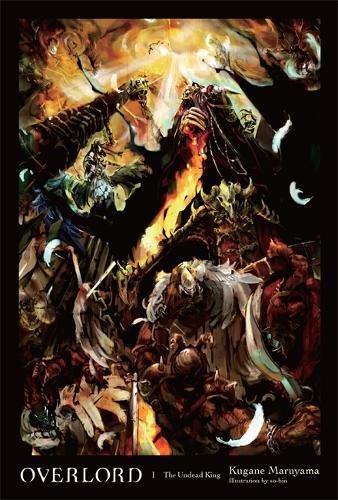
The only downside is that season 1 will leave you itching for more. Which is what all first seasons are meant to do so I can’t complain. If you don’t mind light novels, I recommend reading the light novels instead so you don’t end up like me, champing at the bit for the next installment. Or you can join me in hoping for a sequel. Season 2 where?!